“He had never before been able to walk into the distance without it turning into mere surroundings.” —J. R. R. Tolkien
J. R. R. Tolkien wrote Leaf by Niggel while scrabbling under the weight of a backbreaking fantasy, Lord of the Rings.
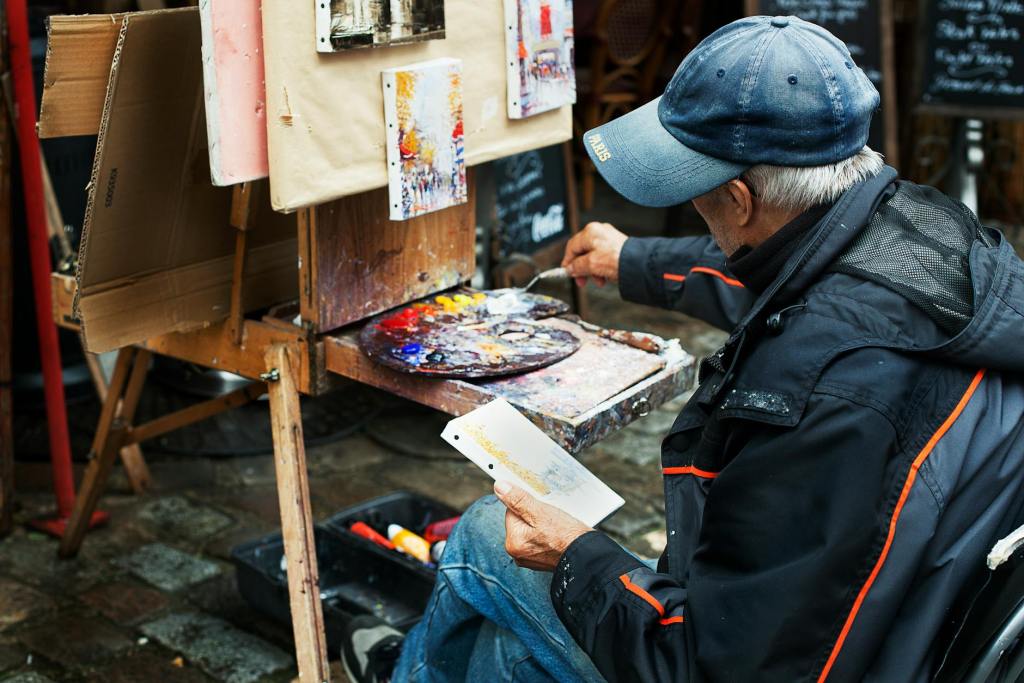
Niggel, a little old man, painted a large canvas in a shed in his backyard. Caught in a fury of inspiration, he scurried up and down a ladder, his brush dribbling green paint. Distractions were annoying interruptions to his work, nothing more. Sometimes he thought the art was very good; other times he wished he had an honest friend who would tell him the truth about his picture.
The pattern of the leaves was painstakingly exquisite, but the painting drew one’s attention toward the elusive river and mountains on the horizon, inviting because of their distance. A boy tapped him on the shoulder before he could finish his project or have time to prepare for the journey. “Your carriage is here. It’s time to go, old man.”
They used it to patch his neighbor’s leaking roof. His name was forgotten; his painting torn and water stained.
Michael, escort this long-time traveler home.
The carriage came all too soon. But when Niggel was released to walk into the distance he’d once tried to capture on his canvas, his picture became a country. A tall tree with familiarly detailed leaves stood in the middle of the landscape. The tree shaded a small cabin where creative juices could flow unhindered. This was his haven where, finally, he could paint the last brushstroke, plant the last tree. It was finished. It was beautiful.
It was there for other battle-worn soldiers; Niggel’s Great Commission had at last been fulfilled.
It is finished.
Only those who’ve experienced ultimate victory have the audacity to say, “It’s finished.” The Son of Man gasped it in dying triumph. It is finished, here on earth. I can paint the big picture now. It is the new beginning.
In the Shadowlands I start my work, under the Master’s hand. I’m writing the first page. Then, in the distance, I can finish the book. I’m painting the canvas. Then I can cultivate the country. I start my task. Only when the carriage carrying the angel Michael comes can I begin the completion. Of course the task looks menial. That’s because it’s just the canvas. I haven’t begun to explore the distance yet.
This is what life means, then. If the Messiah never runs His tender hands over the streaks of red in our palms, never watches us awkwardly wield the paintbrush, the pen, the dishcloth; if He never recognizes our name, if our work stops in the Shadowlands, life is empty and meaningless.
Suddenly, serving ice cream, staining house siding, or vacuuming rugs become hallowed, and urgently important.
Michael, carry this battered soul Home.
 Grace-hallowed Days
Leave a comment